Electricity and Lightning
If electricity takes the path of least resistance, why is lightning not in a straight line?
Because “electricity takes the path of least resistance” is an oversimplification—and lightning is a particularly good example of why.
Lightning doesn't initially know which path has the lowest resistance. It creates its own path through the air as it goes.
What actually happens
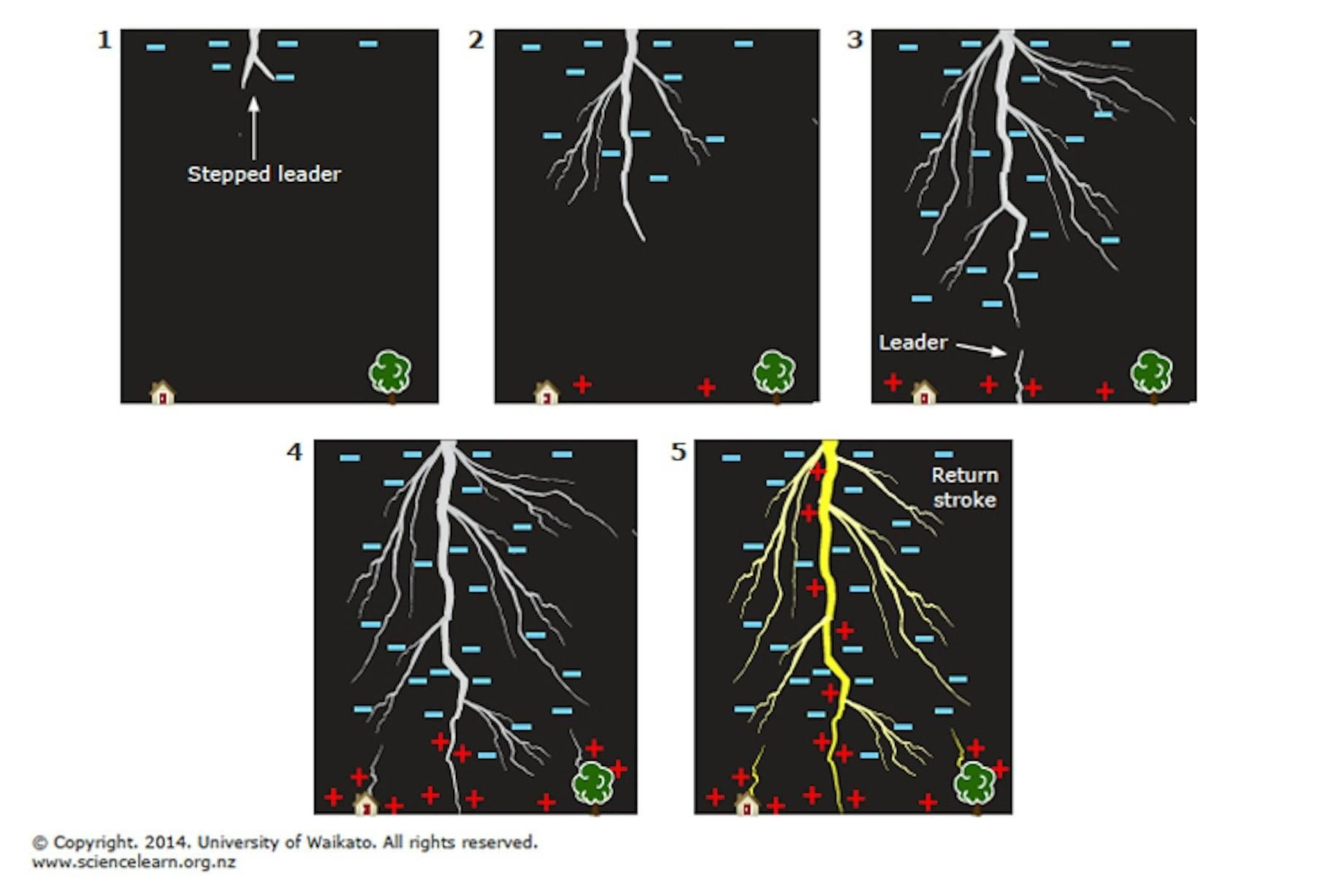
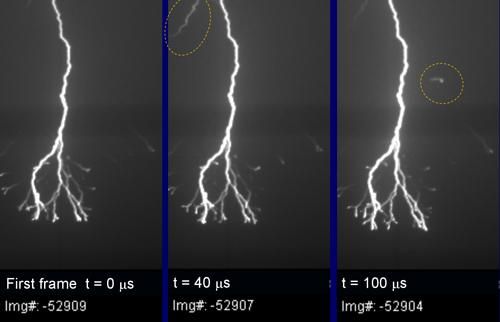
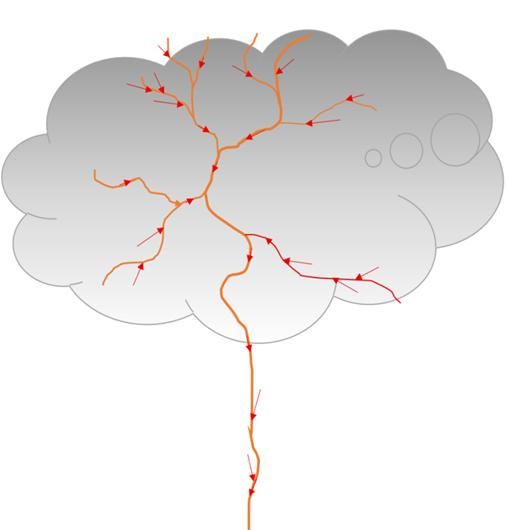
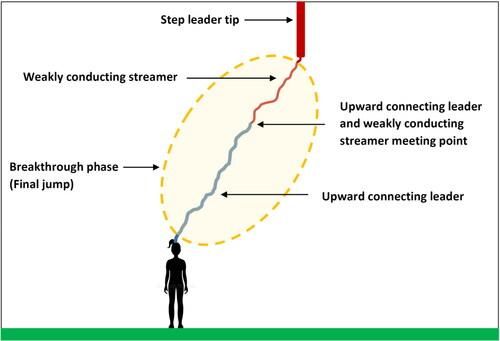
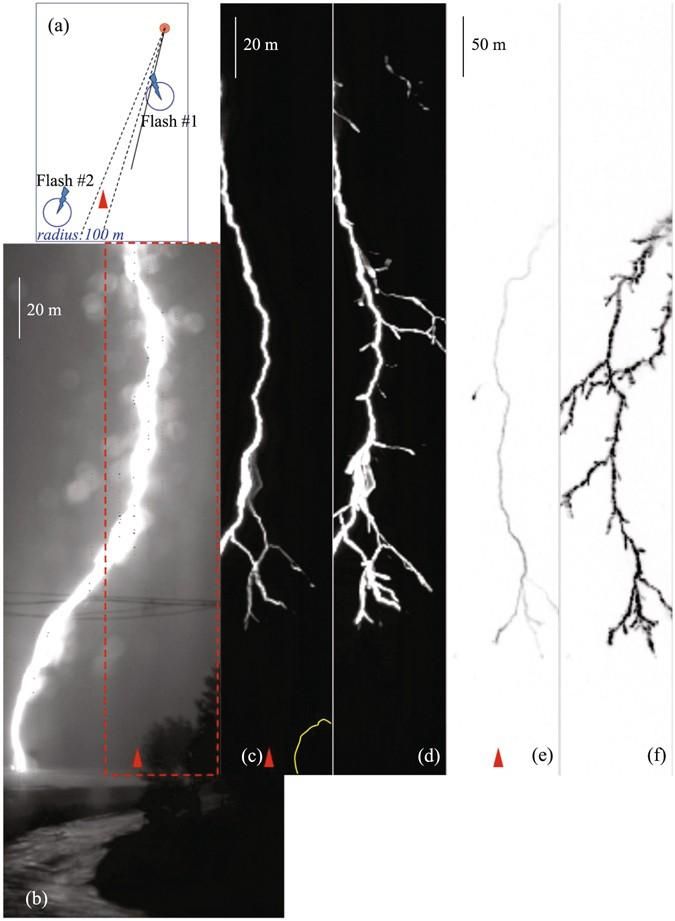
A lightning bolt typically develops roughly like this:
- A huge electric field builds up between regions of a cloud and/or the ground.
- The electric field begins accelerating electrons through the air.
- This ionizes air molecules, creating a partially conductive plasma path.
- The developing channel advances in short jumps called steps, typically tens of meters at a time.
- At each step, there are many possible directions it could go.
- The path that ultimately connects to another charged region becomes the main channel.
- Once the connection is made, a huge current flows through that ionized channel, producing the bright flash we see.
The important part is #5. The developing lightning channel isn't simply searching through an existing network of wires with known resistances. It's building the network as it goes.
So why all the zigzags?
The electric field isn't perfectly uniform.
Clouds contain incredibly complicated distributions of positive and negative charge. Terrain, buildings, trees, humidity, dust, and even previous electrical activity can affect the local electric field.
The developing leader therefore gets influenced by tiny differences in the field. It can branch:
                 |
             ----+
                 |
          +------+
          |      |
          |      +----
          |
          +-------
                  \
                   \
                    +---- ground
Some branches stop. One eventually finds a favorable connection.
And there's an interesting consequence:
The final lightning channel isn't necessarily the geometrically shortest path.
It's more like a maze where the maze is being generated while you're trying to find the exit.
But doesn't resistance matter?
Yes—once a conductive channel exists, resistance matters enormously.
After the lightning leader establishes a connection, the channel becomes extremely conductive plasma. The enormous current then preferentially follows that established channel rather than continuing to search for another route.
That's why the bright return stroke appears to travel along the seemingly bizarre, already-established path.
So a better version of the popular rule is:
Current distributes itself according to the electrical properties of the available paths; it doesn't simply choose the physically shortest or visually straightest path.
And lightning takes this to an extreme because the “available paths” are being created dynamically in air.